
♫ Alameda - Noche Andaluza ♫
Cerca del Guadalquivir (Near the Guadalquivir)
Un patio y un limonar (A courtyard and a lemon grove)
Noche andaluza de abril (Andalusian night in April)
Oliendo a mirto el zaguán (The hallway smelling of myrtle)
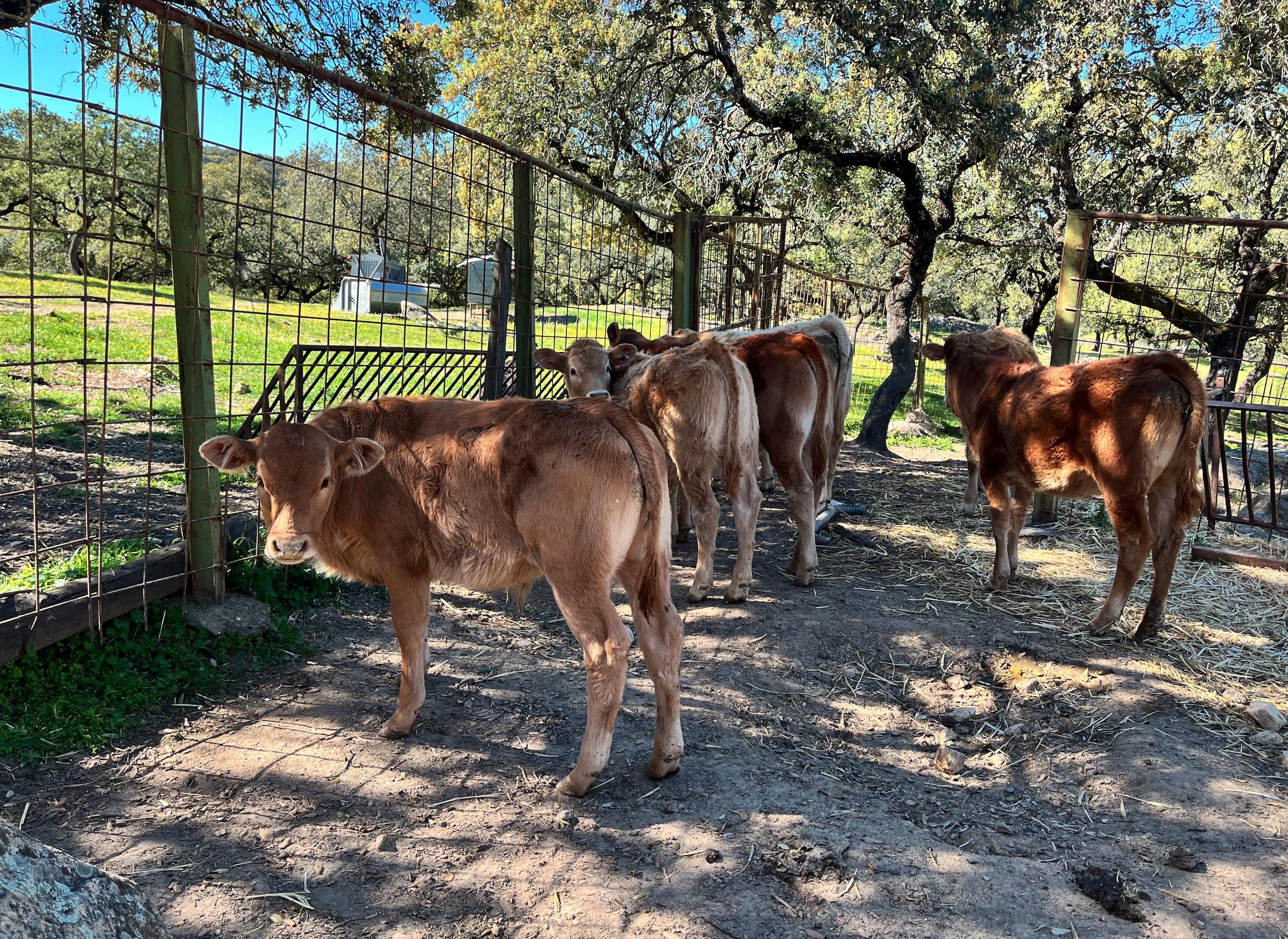
Struggling to put into words all my experiences in Andalucía, it's really better described with song and dance. A lot of flamenco has been accompanying my ears recently. Nothing else felt right. Flamenco en el coche, flamenco en la calle, flamenco at 8:30am in the vegetable garden for a week. Traditional southern song never tires itself of references to classic Andalucían rural life - the moon, the olives, frijónes (beans) by the fire, and simple beauty. Given the opportunity to live in this manner (with modern advantages), the flamenco song I love was a natural pairing, like Iberian pigs and acorns. The special Iberian ham taste (jamon) is derived from diet on acorns from the oak trees.

The Huelva farm
After a seven hour car trip from Valladolid to Seville, and another hour back up toward the Sierra Morena, riding into the WWOOF farm was... Fields of rolling green dehesas, (pastures) which were recently glowing from the uncommon volume of rain recently. When looking on the landscape, one gets the impression that the grass is undoubtedly mowed, as if by some obsessive farmer. But when you see the livestock grazing the land you realise it really is mowed - and to perfection. Driving down that bumpy road, you will hold your jaw up with both hands, and claw at the windshield like Homer Simpson when he really does arrive in the mythical Alaskan wilderness (see: The Simpsons Movie, 2007). I contacted Marie, one of the owners of a cortijo (a kind of farmhouse) who listed it on WWOOF. Her son Marco picked me up in a red land rover. The fuel had risen so abysmally we were offered two cans of beer, accepted very gratefully. I originally felt very foolish for trying my spanish - Marco and Marie speak perfect Connecticut, having lived there a long time ago, originally. Alfonso, the father, was the inheritor of the farm and is the Spaniard. I seemed to have good timing, because on my second day Marco was holding a 41st birthday, serving tables of mexican food, with people from all over the region coming over. There were people from Barcelona, Huelva natives, Seville city philosophy professors, Englishmen, a real mix. But we were all here in Andalucía, in this green patio under orange, persimmon, lemon trees encircled by wisteria. The day after, Marie held a dinner too, and I met an older generation of people who moved to Aracena in the 70s and 80s, building their houses here and essentially taking the perfect opportunity after the dictatorship. One of my favourite moments of the entire stay was the final job. The whole family got together and we picked a tree of espino blanco (hawthorn) and put them into woven baskets. This would stock the kitchen for tea for the next few months.

Marco, Me, Marie, Alfonso
Dora, Phife, Obe
Perro Andaluz

This is Dora! She's no Scooter, who is sleeping at home, but if you've ever had an animal take to you in a new place, you know it's a special feeling. I'm convinced she's an Australian shepherd, but the owner says she's just a wild-eyed border collie who likes to nip at heels. Nonetheless, when I was getting on with my work throughout the day, or when I went on walks up the mountains, at any time of day or night, she would be there. I really had all the company I needed. Dora had this cheeky habit of grabbing the other dog's collar and playfully wringing them around. The other dog, Obe, is a princess of a dog, with a proud beard and a huge jealousy for affection.

La Cal (Limewash)
"The Mediterranean Sea was known in Arabic as Al-bahr al-abyard, meaning "the middle white sea". Not for the colour of its waters but for the luminous white of the towns and cities on the shores. Everyone has the image of Santorini, the Amalfi coast, or Ibiza. Before painting with cal myself, I had virtually no appreciation or understanding as to why it's white. Of course, the white reflects the sun, keeping away the harsh summer sun from absorbing into the stone. But the organic material used, limewash, is a marvel. It's biodegradable, antibacterial and healthy for the stone. It's a practice used on walls made to last. Essentially, the calcium oxide/hydroxide (which comes from mines) is mixed, and left to set properly. The bucket used to paint onto walls needs a correct ratio - like melted icecream, I thought. Accustomed to painting with modern plastic paint, I was shocked to see that, when applying the limewash, your main objective is to simply wet the wall with it. It's far less precise than modern painting, because as long as the wall is entirely wet, and the limewash mixture is more or less right, the sun will reliably bleach it white. That's not to say there isn't a technique - I also came to appreciate the long tradition, and process of doing it efficiently, and well. In this tradition, women would paint the interiors, and men the outside. The 76 year old owner was five times as fast as I was.
Before:

After:

The sad tail of a jamon leg and three dogs

The interiors of these sorts of places are enchanting. Being built out of stone and lasting for generations, they are living and breathing. Coming from my cheaply built apartment, my room in the cortijo was just so tactile and immediately homely. I was given the entire upstairs attic area of one end, with a bathroom, living room, and assortment of random things collected over decades. It was the kind of free roam that reminded me of staying at my grandparents in suburban Adelaide growing up.