♫ Enrique Morente - Canciones de la romería ♫
My Cordoba bound train delayed, I realised my reserved hostel officially closes its reception for the night in 20 minutes. Hustling across the city by midnight would normally be simple, I might arrive a little sweaty only, but during the Spanish holy easter week, this becomes impossible. Especially in these cities, there is nowhere to move at this time. Filled with adrenaline, for if I don't reach this hostel in time I've nowhere to stay in a packed Cordoba city, at 11:55pm I'm staring down the main street drowning in people and noise. If there was a paso about Moses parting the red sea ahead of me, I would be saved. Instead, at 11:59pm I am in the thick of it, actually stuck in-between this absurd float of jesus christ and a marching band. Worried about no one to let me into my accommodation, there are trumpets playing in my ears, a herd of people around me, I can literally look over and see the sign of my hostel. It's a hot and humid night, the enormity of it all surrounds me, and maybe like this I will die?

Semana Santa Procesiones
Before Easter, I regarded the whole Semana Santa celebration as a fun, quaint and peculiar tradition. I heard that some people will be seen crying in the streets, tied up in the excitement. At the least, I could barely imagine Easter celebrated beyond chocolate eggs and awkward Christian silence. I never imagined myself to be so absorbed and moved by it, but I was. In the north, you have more solemn, quite processions. This is to respect the sanctity of the church, people's beliefs and Christ's martyrdom. Shhh.....… In the south IT'S FUCKING CRAZY. THE LOUDER THE BETTER.
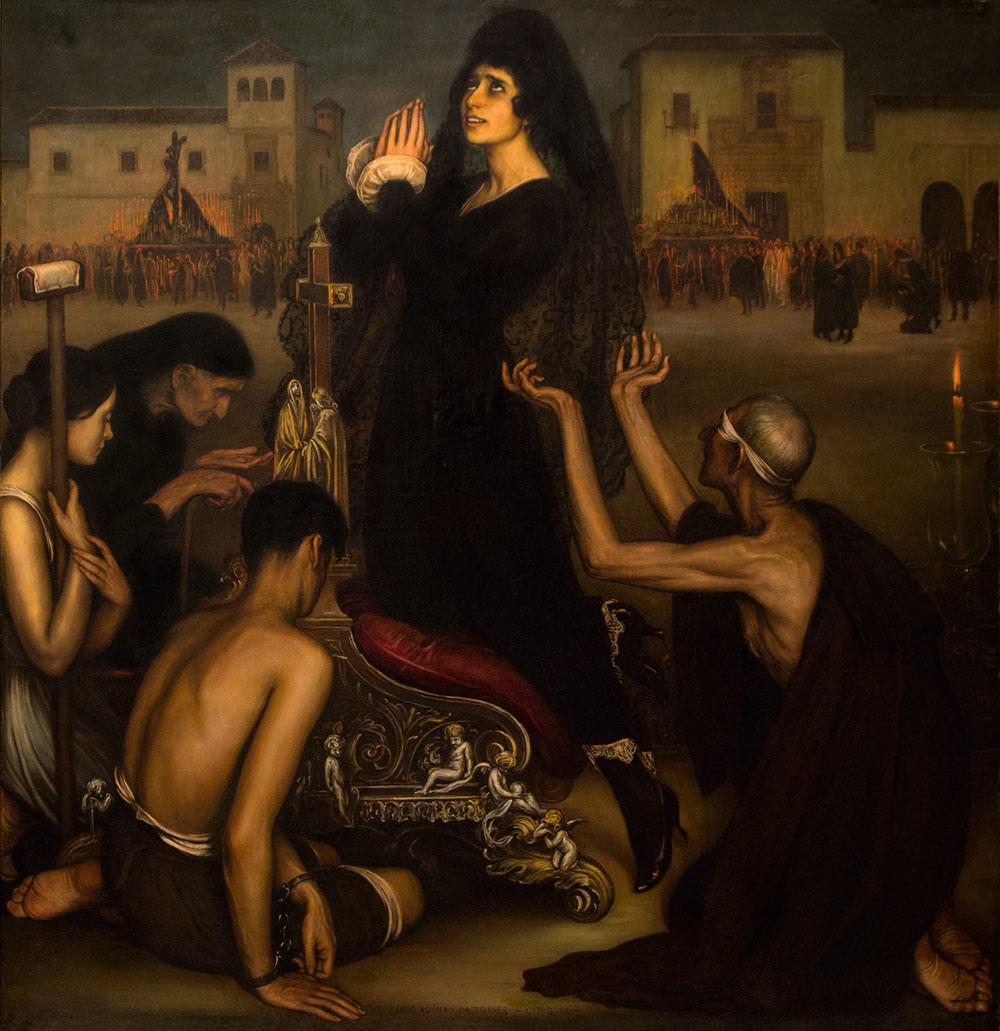
LA SAETA: A traditional religious chant in Andalucía which the pious perform to a crowd of people, singing, wailing about events in the passion.
My first procession was in Aracena, and I was introduced to the appropriate lore. I was watching La Borriquita (the little donkey), about Jesus' jubilant return to Jerusalem on a donkey. It's the chapter before all the Roman violence and martyrdom resistance, and they convey this scene with colourful, happy figures on top of the procession float. These floats are called pasos, and tracking their exits and entries from the churches in the streets is important. The music to La Borriquita was especially lively, celebratory. The drama of the scene is heightened to where it almost feels silly - but because everyone's doing it, the atmosphere feels right.
Most of the famous and most grandiose processions are happening in the big cities, yet I felt lucky to see a smaller community procession in Aracena.
Underneath each paso float there are costaleros - neatly arranged strongmen who have trained for (we assume) months in strength and group coordination. Their job is to lift the giant metal float as one unit, and lumber around the streets for hours to the next church. Around them, there are men and women in the OG KKK outfits blowing incense, holding staffs and banners, kind of providing moral support. You might also find women with mantillas - transparent Spanish lace worn over the head supported by a brace. They're very beautiful and seemed to me struggling with the cold at night. Trailing all these is a truly impressive marching band. The music they play is epic, histrionic and loud.
I have one imaging replaying in my head; the "cross descent" paso on the Cordoba Roman bridge, traipsing towards the Calahorra tower under a full moon. A call and response to the marching band: the piccolo trumpet would play a breif melody on its own, and the rest of the band joined in a rousing chorus after it. All I was personally doing was standing to the side with my hands in my pockets, but I felt like we were really on an important mission. Whatever laid across the river by the tower seemed like an important destination for all of us, spiritually.

La Mezquita (Mosque-Cathedral of Córdoba)
Well this one just has to be seen.
Design styles to the mosque-cathedral of Cordoba, added consecutively over the centuries:
Late Roman (Pre 6th century)
Visigothic (6-7th century)
- reused Roman decorative elements
Umayyad (8th-10th century)
- built by the first Abd al-Rahman I
- Added the red and white stripe horseshoe arches, which together look like an oasis of palm trees inside.
Caliphal style (10th century)
- more additions under the Córdoba caliphate, like the mihrab, mihrab, and gold mosaics
Mudéjar (13th-15th century)
- After the reconquista, Ferdinand III of Castile in 1236, the mosque was turned into a cathedral. Instead of demolishing the pre-existing mosque, there was an uncommon respect among the Christian builders in Córdoba, choosing instead to convert it into a church.
- The mudéjar style mixes Islamic decoration with Christian architecture like ribbed ceilings
Gothic (13th-15th centuries)
- Ya classic ribbed, pointy style
Renaissance (16th century)
- Crazy decision to implant a Renaissance cathedral nave into the middle. Insanely detailed.
Baroque (17th-18th centuries)
- Stylised altarpieces, sculptural religious ornaments
Granada: Troglodyte means Cave Dweller
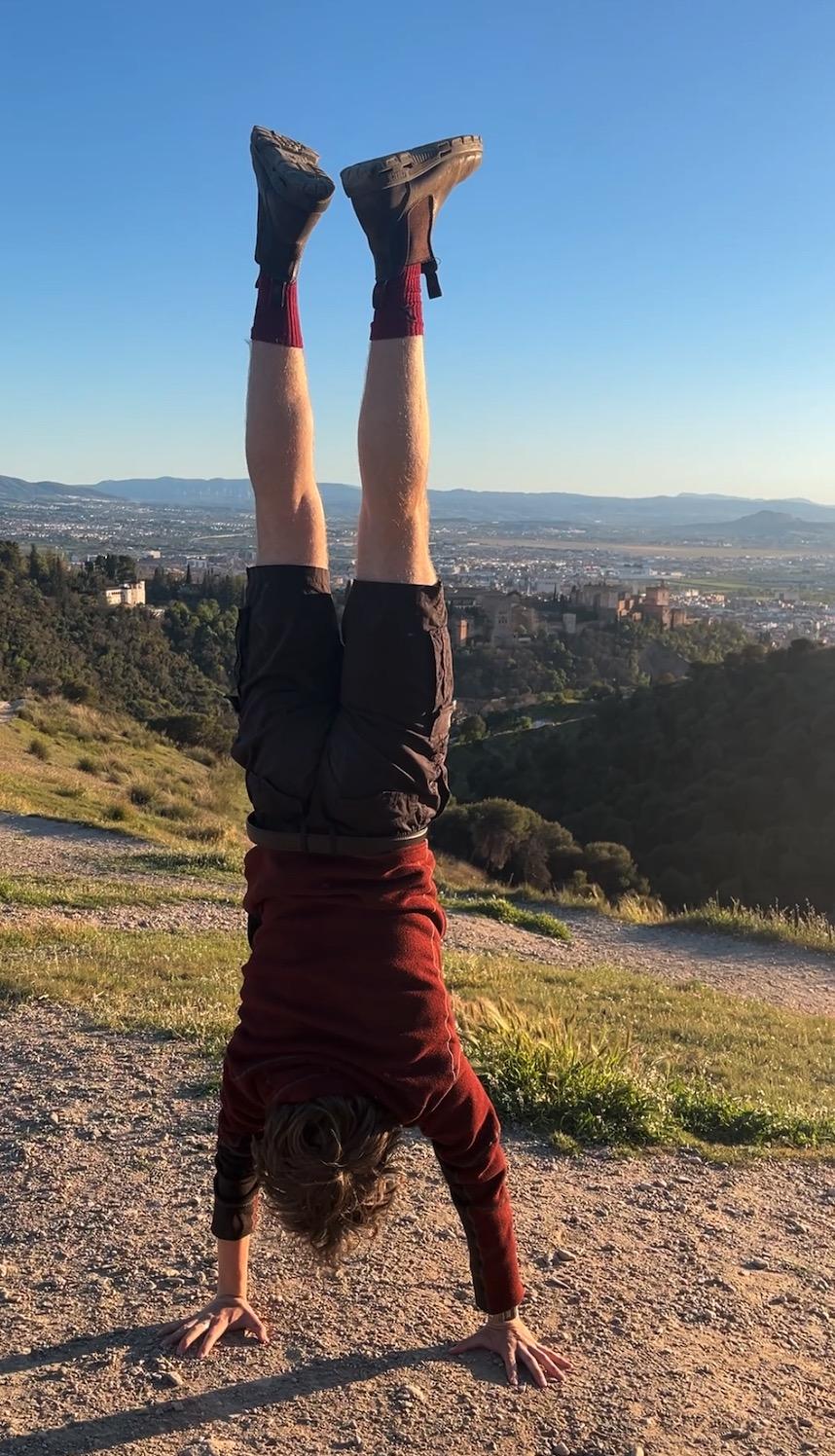
This was my second time in Granada, and I felt all sorts of obscure memories coming back. The mountains are precious vistas, and the one you actually climb is like bushwhacking through old stone alleys and makeshift homes. Reaching the top, you have a show-bag of lookouts and transcendent sits.

Granada is home to Sacromonte, which means literally the sacred mountain. It's placed opposite the Alhambra, and the difference is stark. While the famous Alhambra is curated over centuries, and certainly takes the eye, Sacromonte is a mosaic of historical caves carved out by the roaming gypsies who first lived there. I missed this part of Granada on my first visit and it's my favourite place. It's argued this is where flamenco truly came into its own, where the zambra comes from. Organic fiestas in people's homes - big in Gitano wedding celebrations. I had a bizarre experience walking into one of the little exhibits to find a TV playing a YouTube video of what happened in that space. I've watched the video many times before - It's a flamenco show with really big performer names, and they were performing in this very space that I was now in. Zambra is the traditional folk song and dance of the space, but Sacromonte is also supposedly where zorongo comes from. Zorongo Gitano. This is a specific song and dance style from the neighbourhood.

Actually lived-in caves are fascinating; it's where we humans are naturally placed - tucked away in relative safety and controlled temperature. It's always how I've most preferred to build my Minecraft housing. They've existed forever and in every continent. Coober Pedy vs Sacromonte?

Lifers discovered in Granada hillside: Common Firecrest, Short-Toed Treecreeper, Coal Tit
Palestinian Hospitality
I am ever more grateful to people who let me stay in their homes. I didn't even know Carina, but she trusted Naeem enough to let me stay at her apartment. Taima was there too - they are the coolest. LOCAL KNOWLEDGE. I had the best food in my life in that city - if you are ever there, or if I ever go back future me, go to Rummane Bar. Palestinian food with an emphasis on Granada pomegranates. I felt apologetic for ever eating unseasoned white food in my life.


Legend
They say it was in this valley
this place of paradise
where Eva went around here
with Adam looking for a house.
And upon not finding housing
or official protection
A cave in these mountains
They started digging.
It has arrived to us
What Adam said to Eve:
Having a cave, being with you,
What do I care if it rains?